
Mechanical to Electrical
Training Programme
Course type: Electrical, Technical Skills
Location: Reading, Solihull or Onsite
The Mechanical to Electrical (M2E) Training Programme is delivered across four progressive modules, providing a structured learning journey that develops practical electrical knowledge and skills step by step. Delegates who successfully complete Parts 2, 3 and 4 of the Mechanical to Electrical (M2E) Training Programme and pass the associated examination are eligible to achieve the City & Guilds accreditation.
Watch our
Multi-Skilling Video
«««
Prices Quoted Exclude VAT
Course Type | Electrical, Technical Skills
Certificate | MCP Training Certificate
Duration of Course | 4 Days
Location | Reading or Solihull
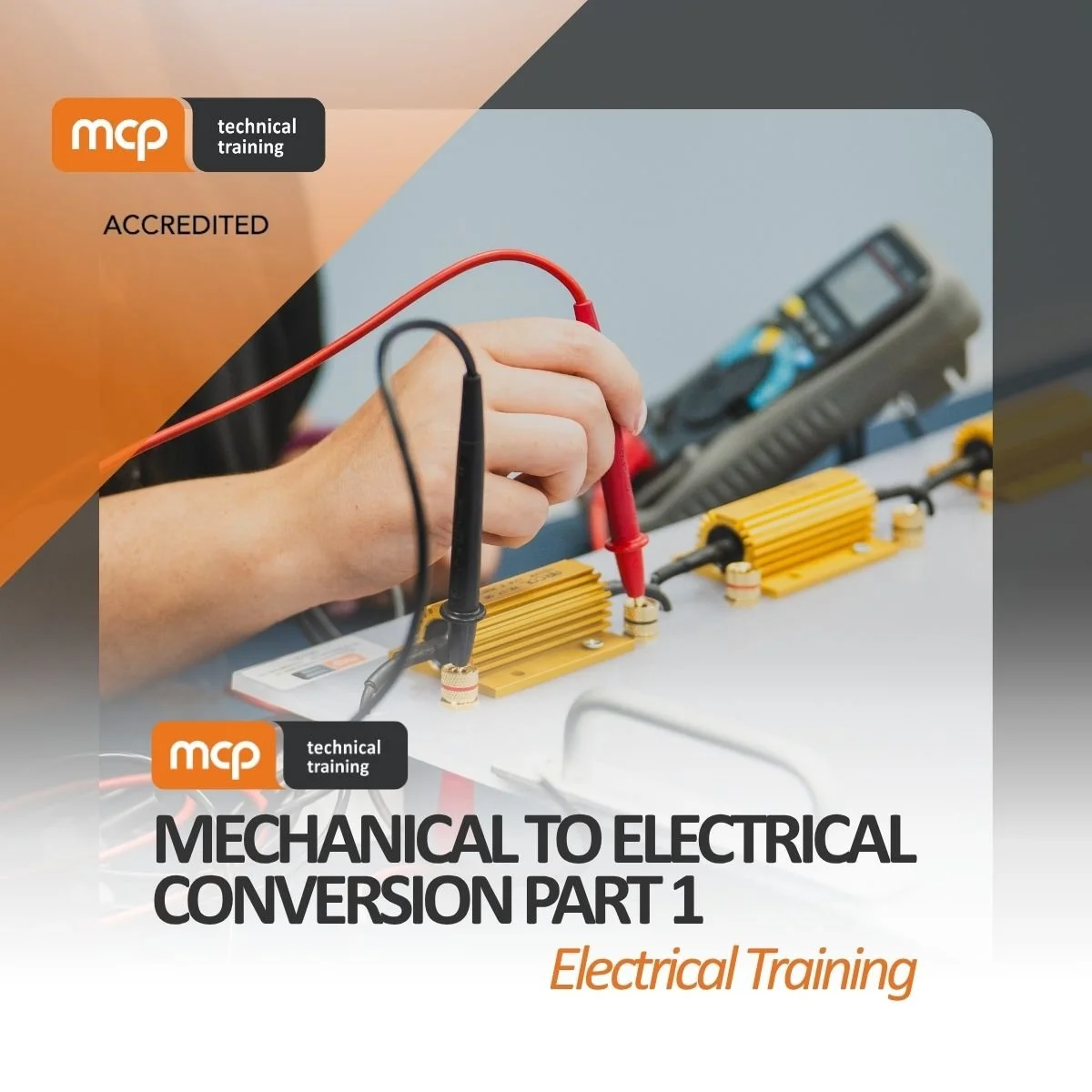
Electrical Safety & Fundamentals
Develop a solid understanding of electrical principles, safe isolation, legislation, electrical circuits and the essential knowledge required before working on electrical systems.
Prices Quoted Exclude VAT
Course Type | Electrical, Technical Skills
Certificate | MCP Training Certificate
Duration of Course | 4 Days
Location | Reading or Solihull
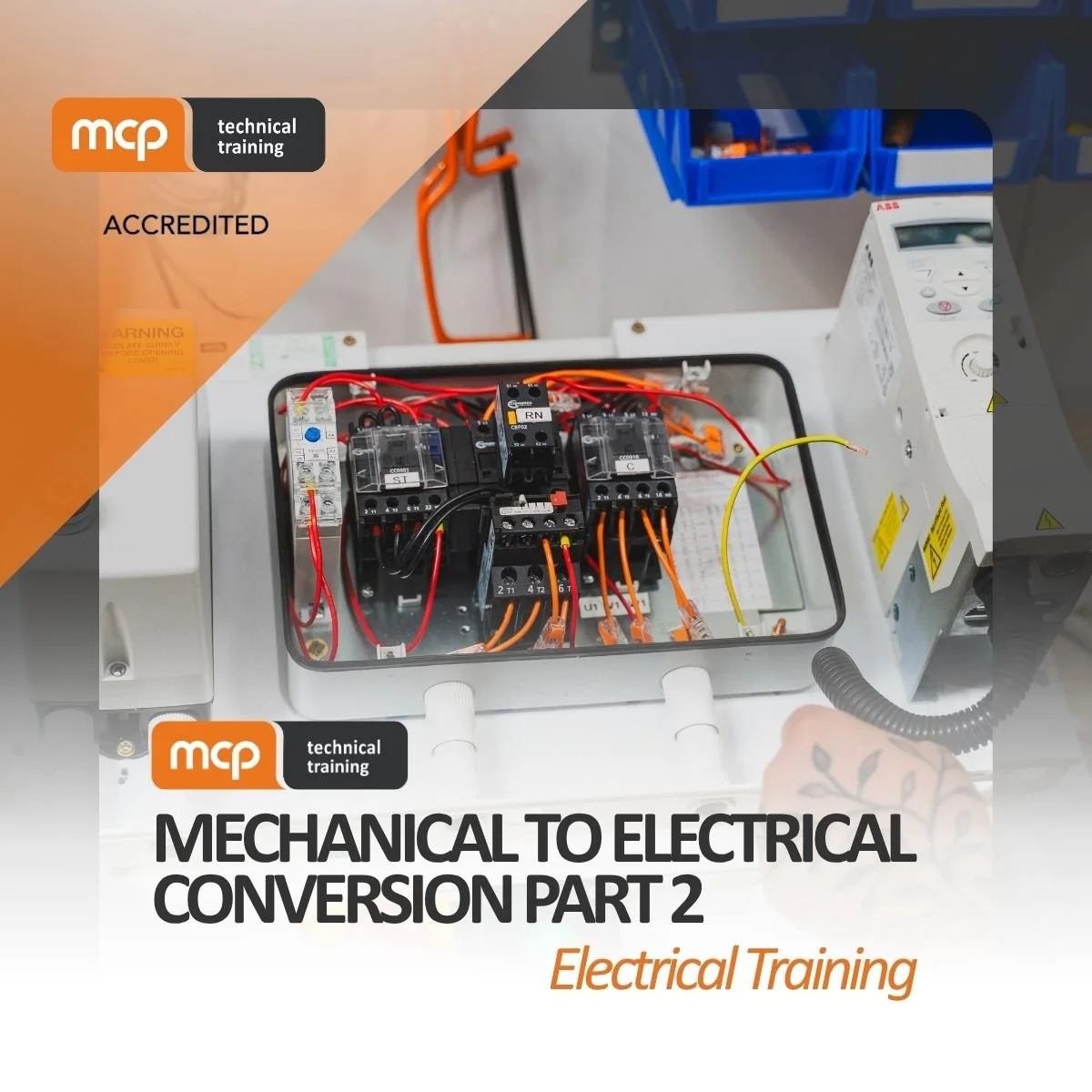
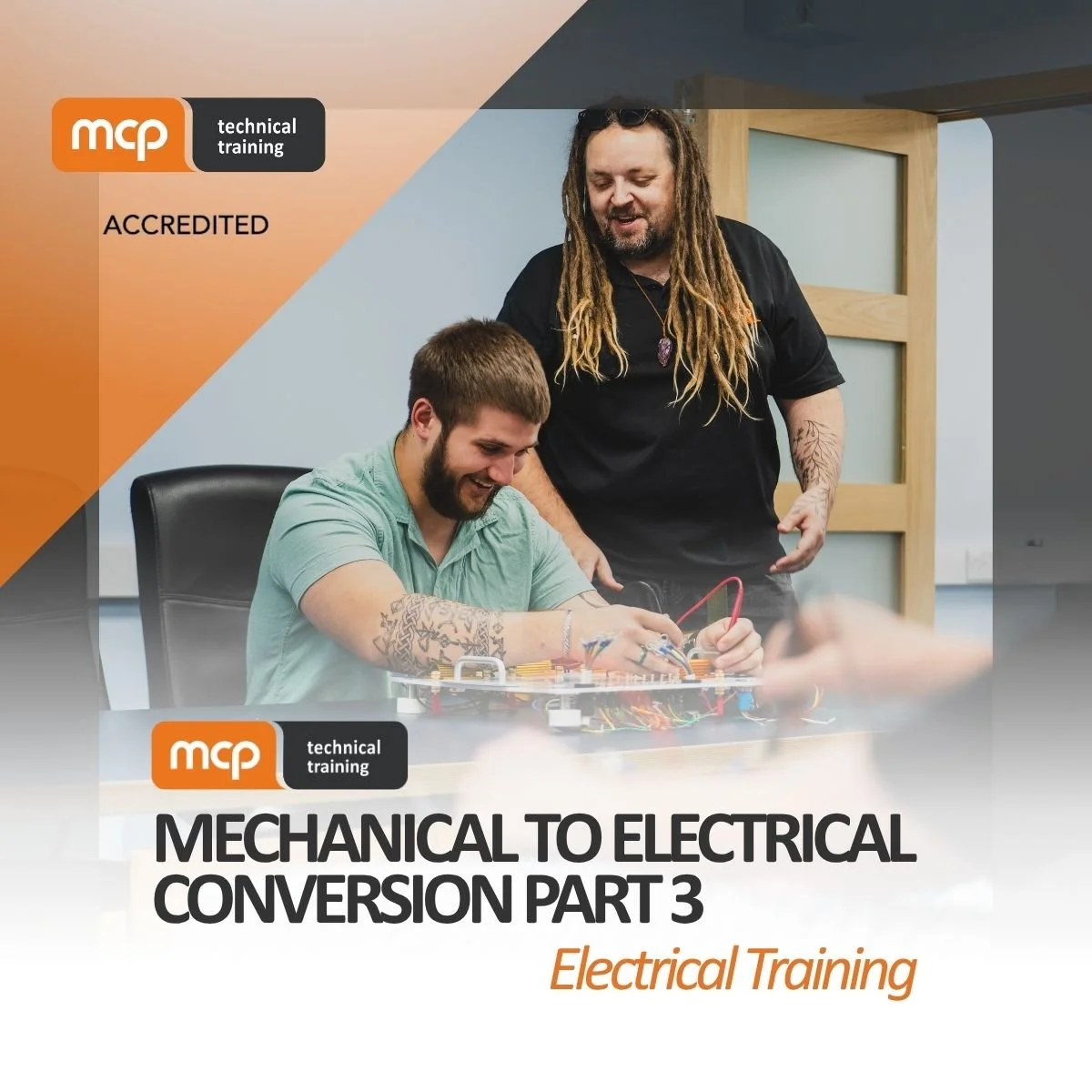
PART 2
Electrical Systems & Motor Control
Build practical knowledge of motors, motor control circuits, relays, contactors and the electrical systems commonly found within industrial maintenance environments.
Prices Quoted Exclude VAT
Course Type | Electrical, Technical Skills
Certificate | MCP Training Certificate
Duration of Course | 4 Days
Location | Reading or Solihull
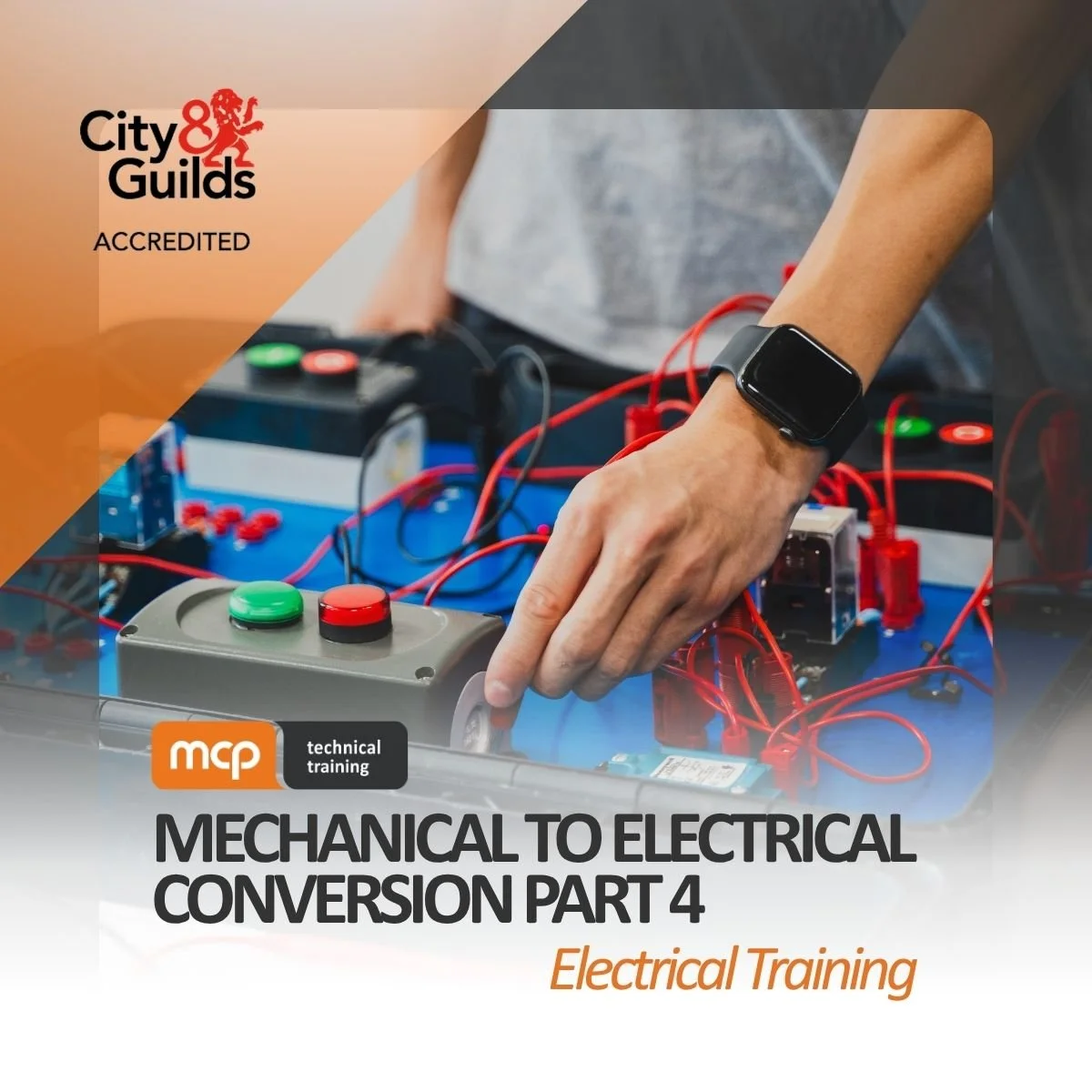
Electrical Fault Finding & Diagnostics
Develop practical fault-finding skills through electrical testing, control systems, sensors and structured troubleshooting exercises based on real industrial maintenance scenarios.
Prices Quoted Exclude VAT
Course Type | Electrical, Technical Skills
Certificate | City & Guilds Accreditation Certificate
Duration of Course | 4 Days
Location | Reading or Solihull
PLCs & Advanced Electrical Maintenance
Develop an understanding of electrical design principles, PLC systems and thermography, while consolidating knowledge gained throughout the programme in preparation for the final assessment.
Each module has its own dedicated course page where you can explore the syllabus, learning outcomes and upcoming course dates.
CITY & GUILDS
Accreditation
If you are unsure which module is the most appropriate starting point, our team will be happy to discuss your existing knowledge and recommend the best learning pathway.
Delegates who successfully complete Parts 2, 3 and 4 of the Mechanical to Electrical (M2E) Training Programme and pass the associated examination are eligible to achieve the City & Guilds accreditation.
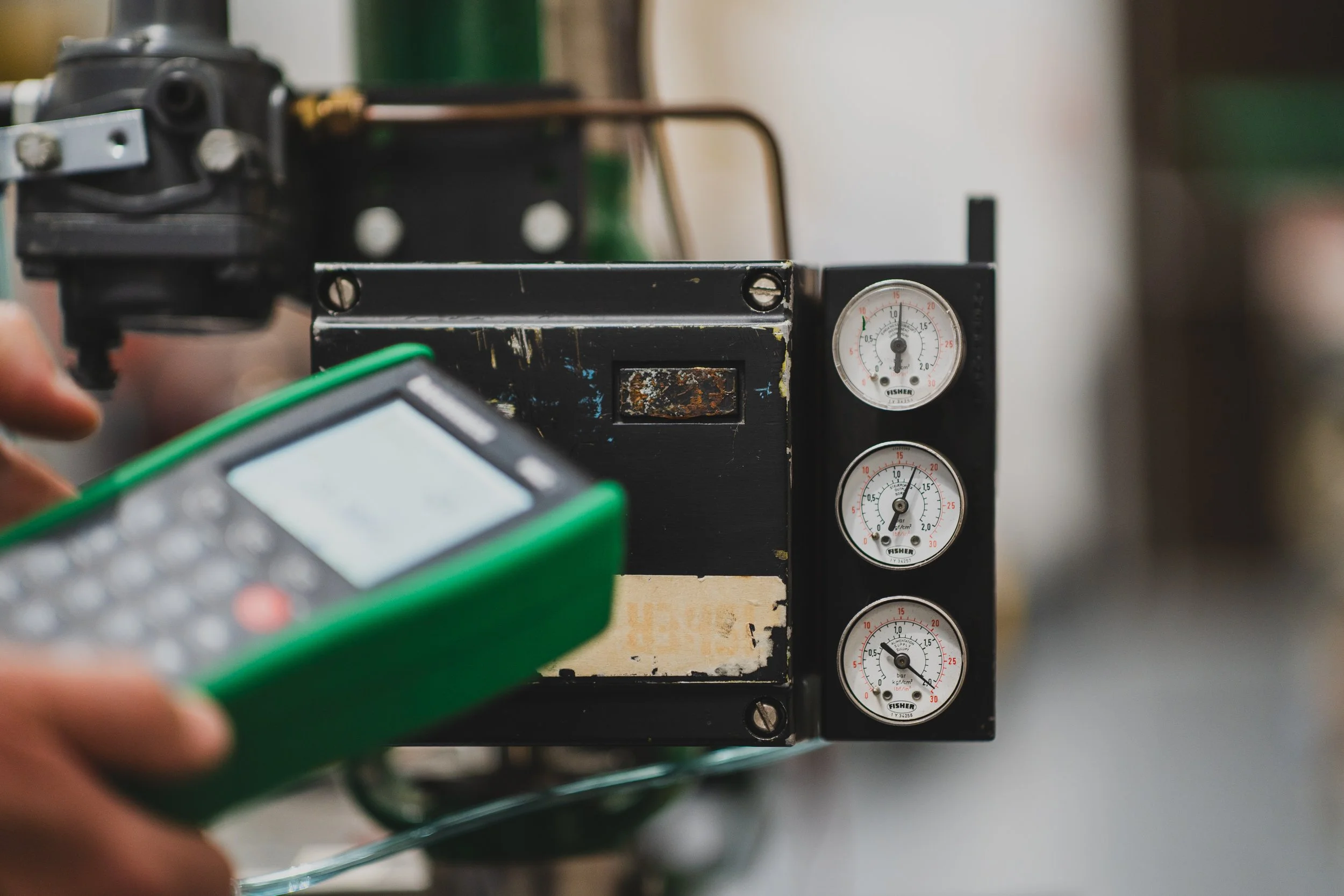
MECHANICAL TO ELECTRICAL
Training Programme
Today's maintenance engineers are expected to work across increasingly complex mechanical and electrical systems. As manufacturing becomes more automated and businesses strive to improve equipment reliability, developing multi-skilled engineers has become a priority for many organisations.
MCP's Mechanical to Electrical (M2E) Training Programme has been designed specifically for mechanical engineers who want to develop practical electrical knowledge and maintenance skills in a structured, progressive way.
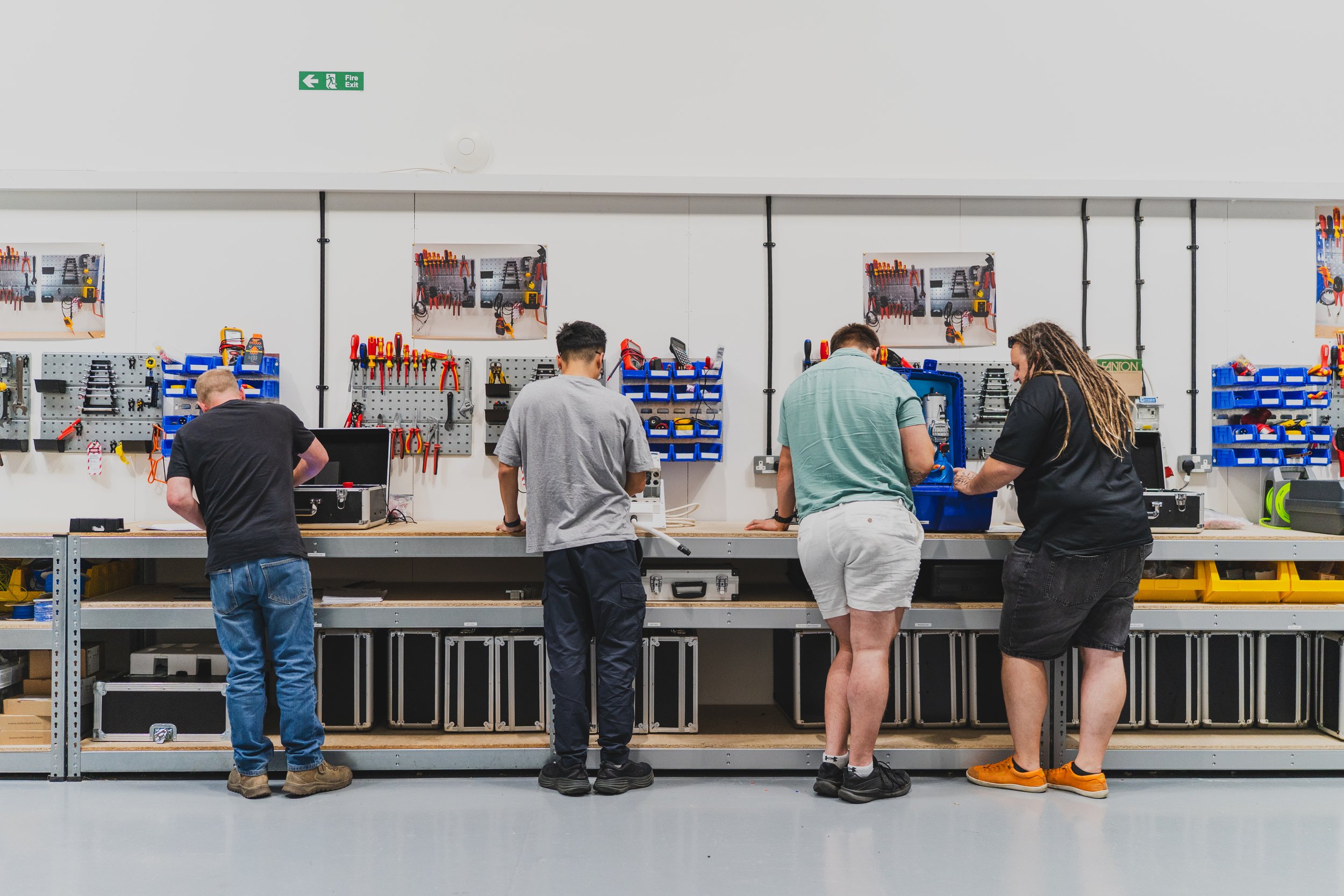
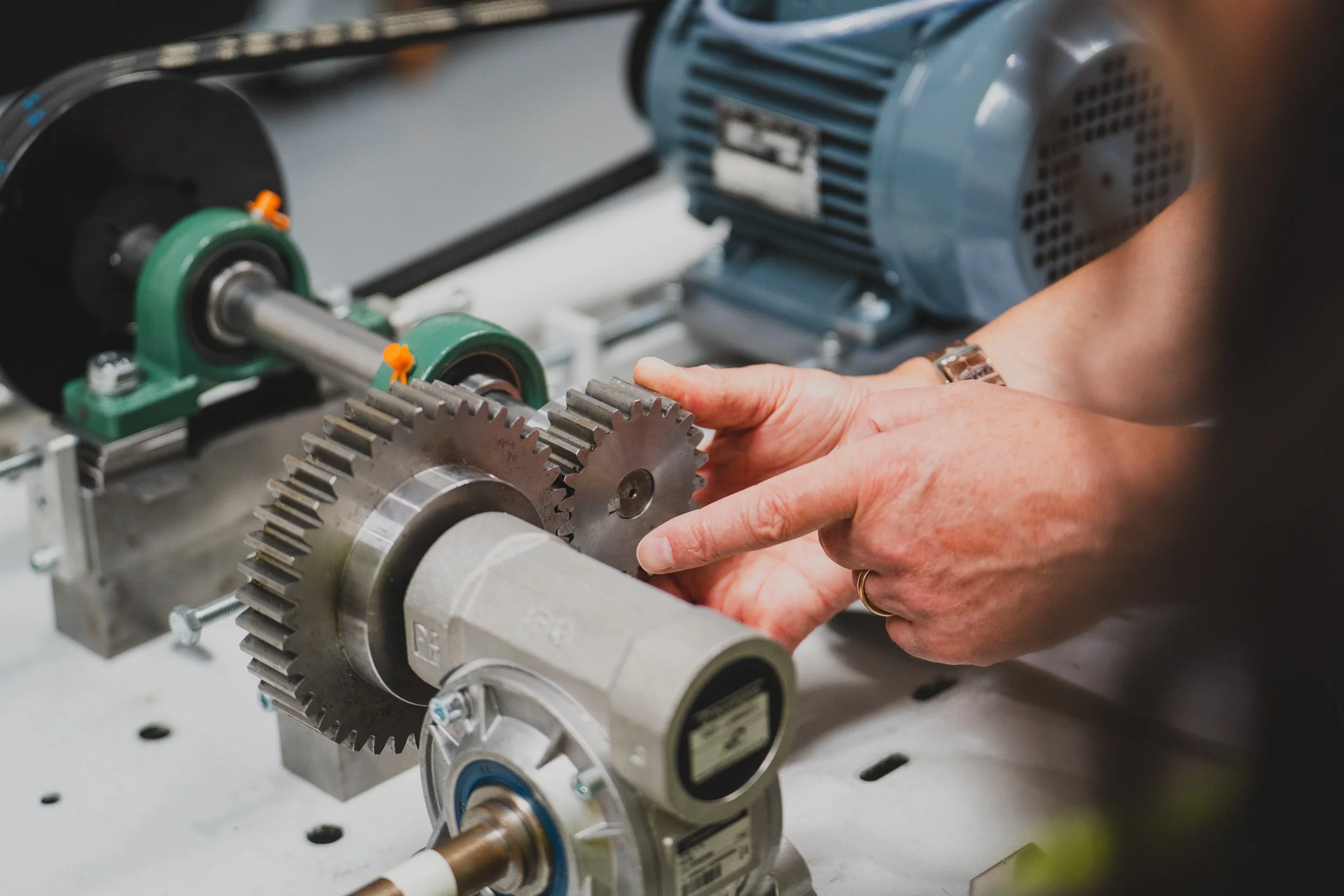
Delivered by experienced engineering professionals, the programme combines classroom learning with practical workshop exercises, giving delegates the confidence to apply their new skills safely and effectively in the workplace.
Whether you are developing an individual engineer or investing in the capability of your entire maintenance team, our four-part programme provides a clear pathway towards greater electrical competence.
M2E Conversion Programme
WHY ATTEND
Modern production facilities rely on integrated mechanical and electrical systems working together. As automation continues to increase, maintenance engineers are expected to diagnose faults, understand control systems and support equipment that combines both disciplines. Mechanical to Electrical (M2E) Training helps bridge the gap between mechanical experience and electrical competence, enabling engineers to develop the practical knowledge needed to work more effectively within today's maintenance teams.
Developing multi-skilled engineers can help organisations to:
» Improve engineering flexibility across departments and shifts.
» Respond more quickly to equipment breakdowns.
» Strengthen fault-finding and diagnostic capability.
» Reduce reliance on specialist contractors for routine maintenance activities.
» Improve collaboration between mechanical and electrical teams.
» Support succession planning and future workforce development.
» Increase confidence when working with electrical systems.
» Build a more resilient maintenance function capable of supporting modern manufacturing operations.
IS THIS PROGRAMME
Right for You?
The Mechanical to Electrical (M2E) Training Programme has been developed for organisations looking to broaden the skills of their maintenance teams and improve engineering capability.
It is particularly suitable for:
» Mechanical Maintenance Engineers
» Mechanical Fitters
» Maintenance Technicians
» Multi-skilled Engineers wishing to strengthen their electrical knowledge
» Engineering Apprentices progressing into maintenance roles
» Manufacturing and Production Engineers
» Facilities Maintenance Engineers
» Employers investing in workforce development and succession planning
Whether you are training one engineer or an entire maintenance department, the programme provides a practical route to developing greater electrical knowledge and confidence.
WHAT WILL YOU
Be Able to Do?
By completing the Mechanical to Electrical (M2E) Training Programme, delegates will develop practical knowledge and skills in areas including:
» Electrical safety and safe isolation.
» Electrical principles and legislation.
» Electrical circuits and components.
» Motors and motor control systems.
» Reading and interpreting electrical drawings.
» Electrical testing techniques.
» Structured fault finding and diagnostics.
» PLC fundamentals.
» Practical maintenance techniques used within industrial environments.
The programme has been designed to provide knowledge that can be applied confidently within day-to-day maintenance activities, helping engineers contribute more effectively to equipment reliability and operational performance.
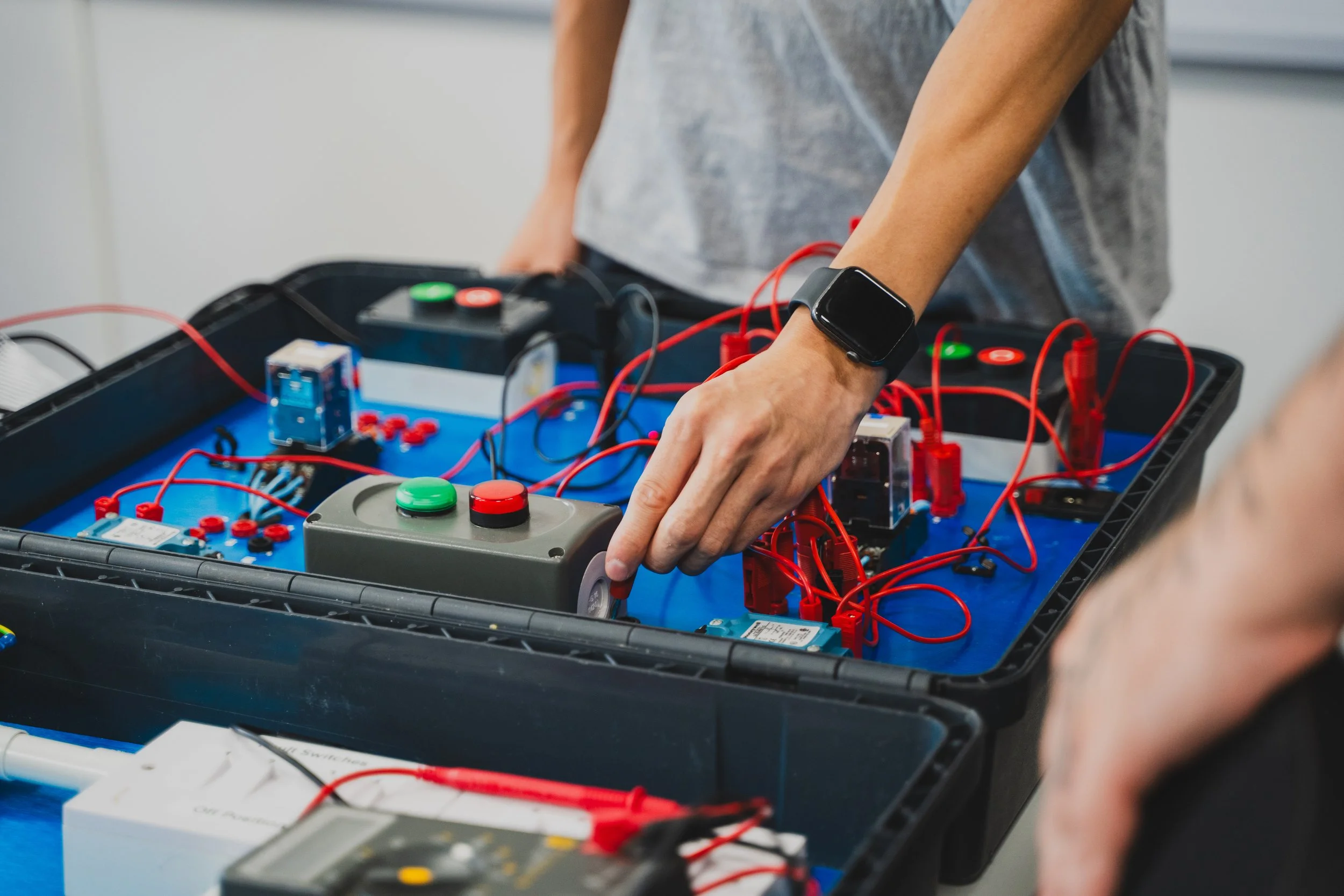
MECHANICAL TO ELECTRICAL
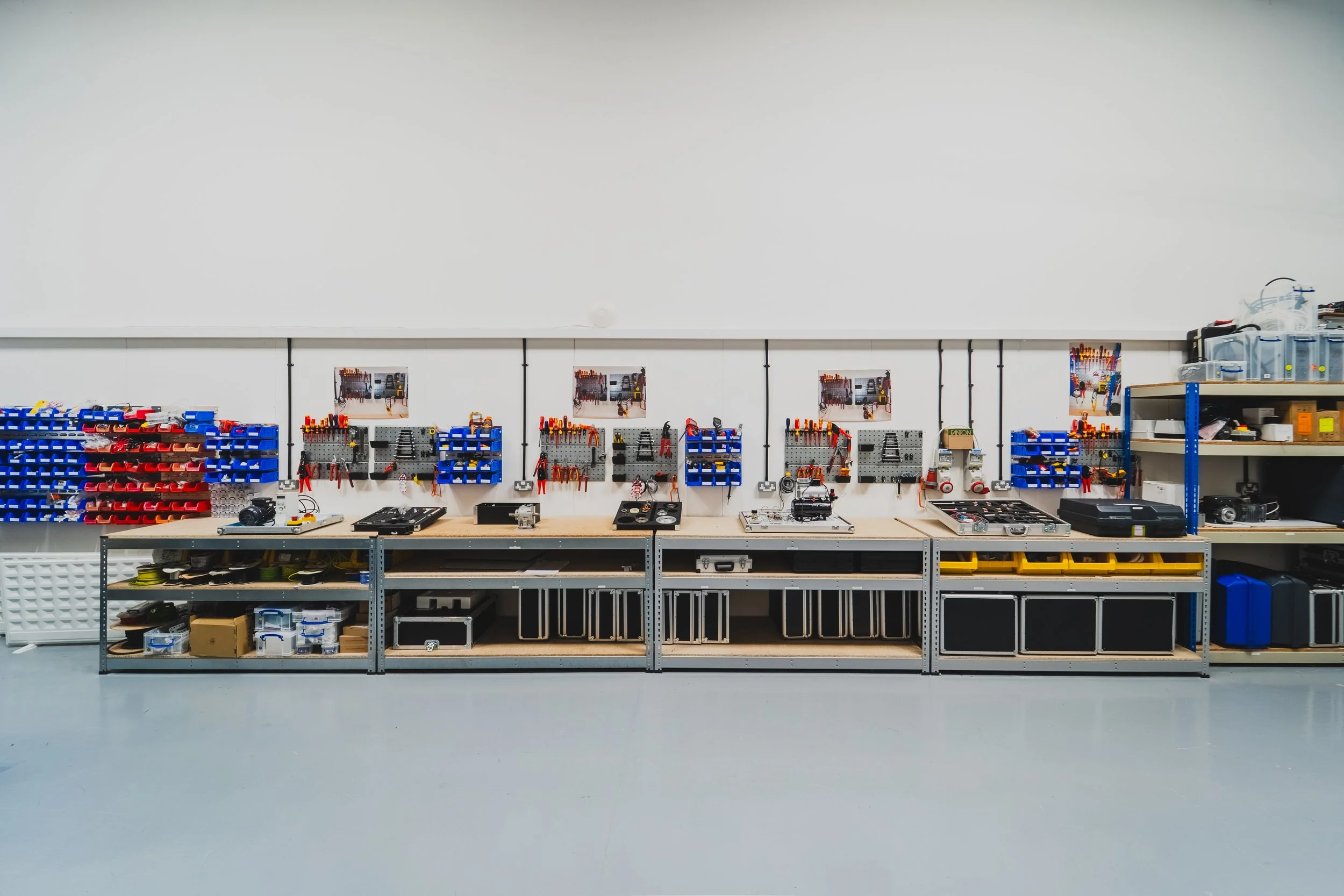
Training Rigs
DELEGATE
Benefits

Training delivered by experienced engineering instructors.

Practical, hands-on learning in a workshop environment.

Flexible public course and on-site training options.

Practical training based on real maintenance environments.

Small class sizes for more focused, practical learning.

Structured learning that builds knowledge and confidence.
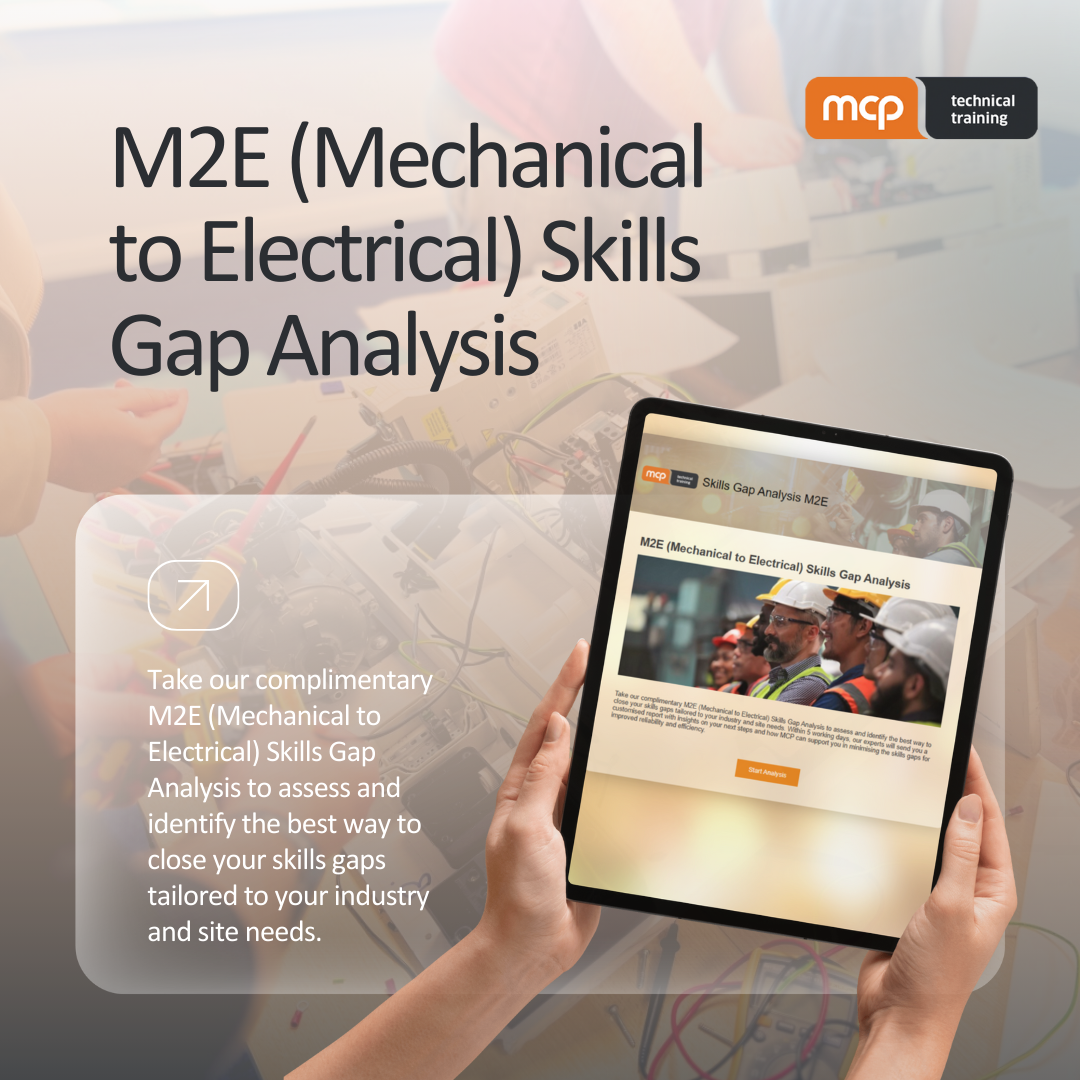
BEGIN YOUR MEACHNICAL TO ELECTRICAL
Whether you are looking to develop a single engineer or strengthen the capability of your entire maintenance team, MCP's Mechanical to Electrical (M2E) Training Programme provides a practical and structured route to developing confident, multi-skilled maintenance engineers.
Explore each stage of the programme to learn more about the individual modules or contact our team to discuss the most appropriate training pathway for your organisation.
Training Journey


FAQs
-
We recommend that most delegates begin with Part 1, as it provides a solid grounding in electrical principles, safe working practices and the core knowledge required throughout the rest of the programme. However, experienced engineers with existing electrical knowledge may be able to start at Part 2. If you are unsure, our team will be happy to advise on the most appropriate entry point.
-
Yes. Each module can be completed individually, allowing organisations and delegates to focus on specific development needs. However, many delegates choose to complete the full programme to build their knowledge progressively.
-
Delegates who successfully complete Parts 2, 3 and 4 of the Mechanical to Electrical (M2E) Training Programme are eligible to achieve the associated City & Guilds accreditation.
-
Yes. Every module combines classroom learning with practical workshop exercises, allowing delegates to apply their knowledge in realistic industrial maintenance scenarios.
-
Yes. The programme can be delivered at one of MCP's training centres or on-site at your own premises for groups of engineers.