What Happens When Your Best Engineer Gets Promoted?
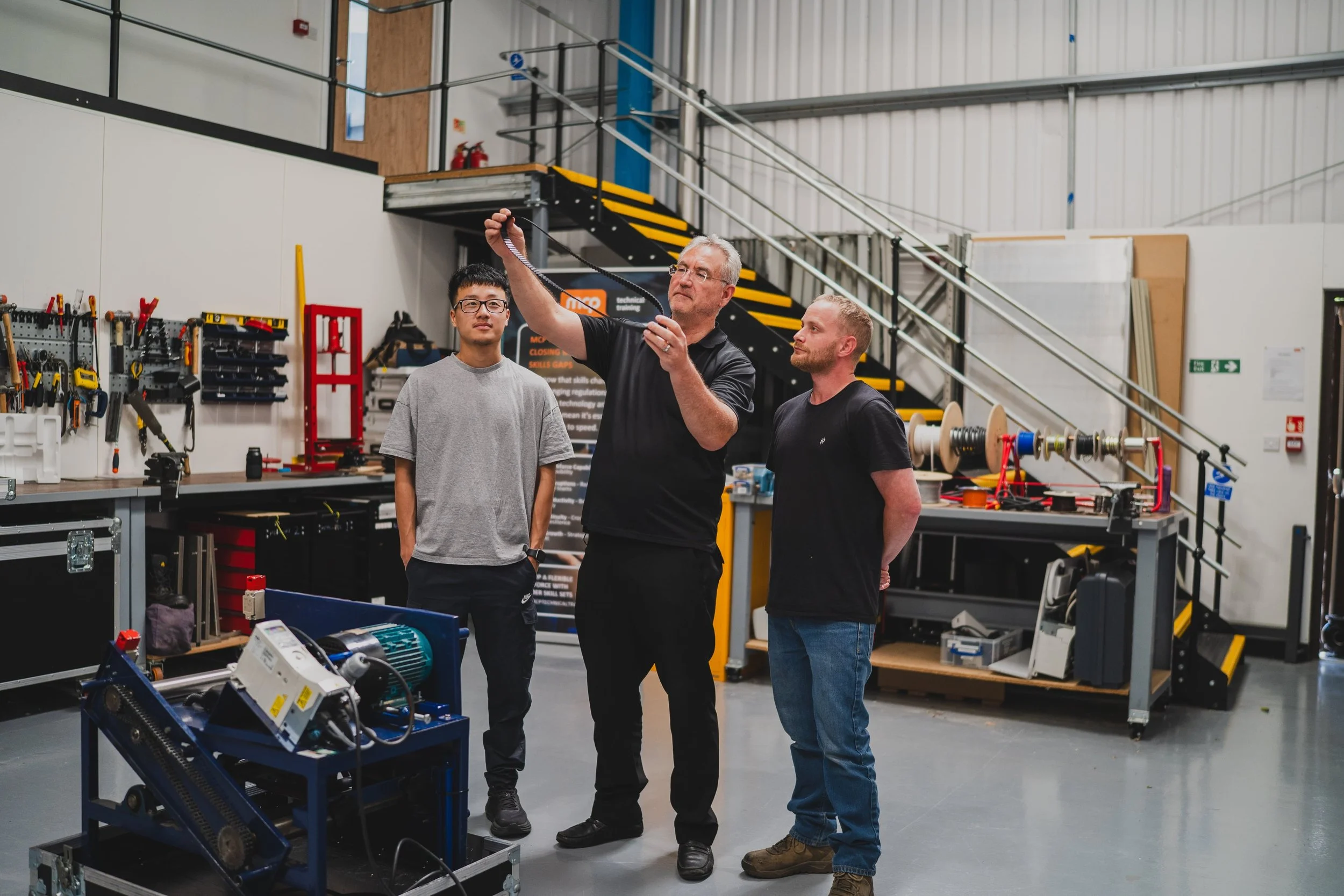
From fixing machines to leading teams.
What happens when your career takes the next step?
Back in 1969, Dr Laurence J. Peter and Raymond Hull introduced a management concept that still raises a few eyebrows today.
The Peter Principle suggests that people tend to be promoted until they reach a position where their existing skills are no longer enough.
Not exactly the most encouraging career advice, is it?
But there's an interesting point behind it, particularly in engineering.
When Technical
Skills Open New Doors
Imagine an engineer who has spent years developing their technical knowledge, solving complex problems and keeping production running.
Their experience is recognised, and a new opportunity comes along: leading an engineering team.
It's a natural progression, and an exciting one.
But while their technical knowledge remains invaluable, the new role brings different responsibilities.
Suddenly, there's more to think about than machinery and maintenance:
Leading and motivating people.
Planning workloads and managing resources.
Making decisions about budgets and priorities.
Developing others and supporting team performance.
The challenge isn't that engineers lack management potential. Quite the opposite.
It's about recognising that career progression can take different directions, each requiring its own skills and development.
Related Articles

How Can Maintenance Development Centres Solve Key Industry Challenges?

It Opened My Eyes to a New Way of Thinking
A Different Set of Tools
for the Job
Nobody expects an engineer to work on unfamiliar equipment without understanding how it operates.
Yet when it comes to management, we sometimes expect people to learn everything as they go.
Of course, experience is a great teacher. But having the right preparation can make the journey considerably smoother.
And that's where the Peter Principle becomes particularly interesting.
Perhaps the real question isn't whether someone has reached their level of competence, but whether they've been given the opportunity to develop the skills needed for their next step.
Two Career Paths, One Goal: Development
Not every experienced engineer wants to become a manager, and that's perfectly fine.
For some, the next step is about becoming a technical specialist, developing advanced fault-finding abilities or gaining expertise in increasingly complex engineering systems.
For others, it's about taking on leadership responsibilities, managing teams and influencing wider operational performance.
Neither pathway is more valuable than the other. They simply require different development opportunities.
For organisations, understanding which development opportunities are most appropriate for their workforce is equally important.
This is where Maintenance Development Centres (MDCs) can help. By assessing technical competencies and identifying development needs, MDCs provide organisations with valuable insight to support more targeted training and technical career development.
After all, career progression shouldn't have to mean moving away from the skills someone enjoys using.
At MCP, both routes are supported:

Technical development:
MCP Technical Training helps engineers build on their existing knowledge and develop more advanced practical skills.

Management development:
MCP Management Training supports engineers moving towards supervisory, leadership and management responsibilities.
The Course We Wish We'd Had Earlier

For engineers choosing the management pathway, the transition brings its own opportunities and challenges.
This thinking is closely connected to the story behind MCP's New Engineering Manager (NEM) training.
Ceri Davies, who progressed from a technical engineering background into management, knows the transition first-hand.
Looking back at his early career, he recognised that structured management training would have been invaluable when he first started leading people in an engineering environment.
In fact, NEM was inspired by the course he wished he'd attended in his twenties.
Today, MCP's New Engineering Manager Training provides that opportunity for others.
The four-day, City & Guilds accredited programme helps engineers develop practical skills in leadership, communication, maintenance planning, budgeting and people management.
From Technical Skills to Leadership Confidence
Whether an engineer chooses to deepen their technical expertise or develop their leadership capabilities, the principle remains the same: professional development shouldn't stop at promotion.
And sometimes, progressing means learning to approach familiar challenges from a different perspective.
As one delegate reflected after attending our New Engineering Manager programme:
“It opened my eyes to a new way of thinking.”
You can read more about this perspective in our article, It Opened My Eyes to a New Way of Thinking.
Perhaps that's the most useful lesson we can take from the Peter Principle.